 (208) 991-3502
 Meridian, ID






 January 8, 2026
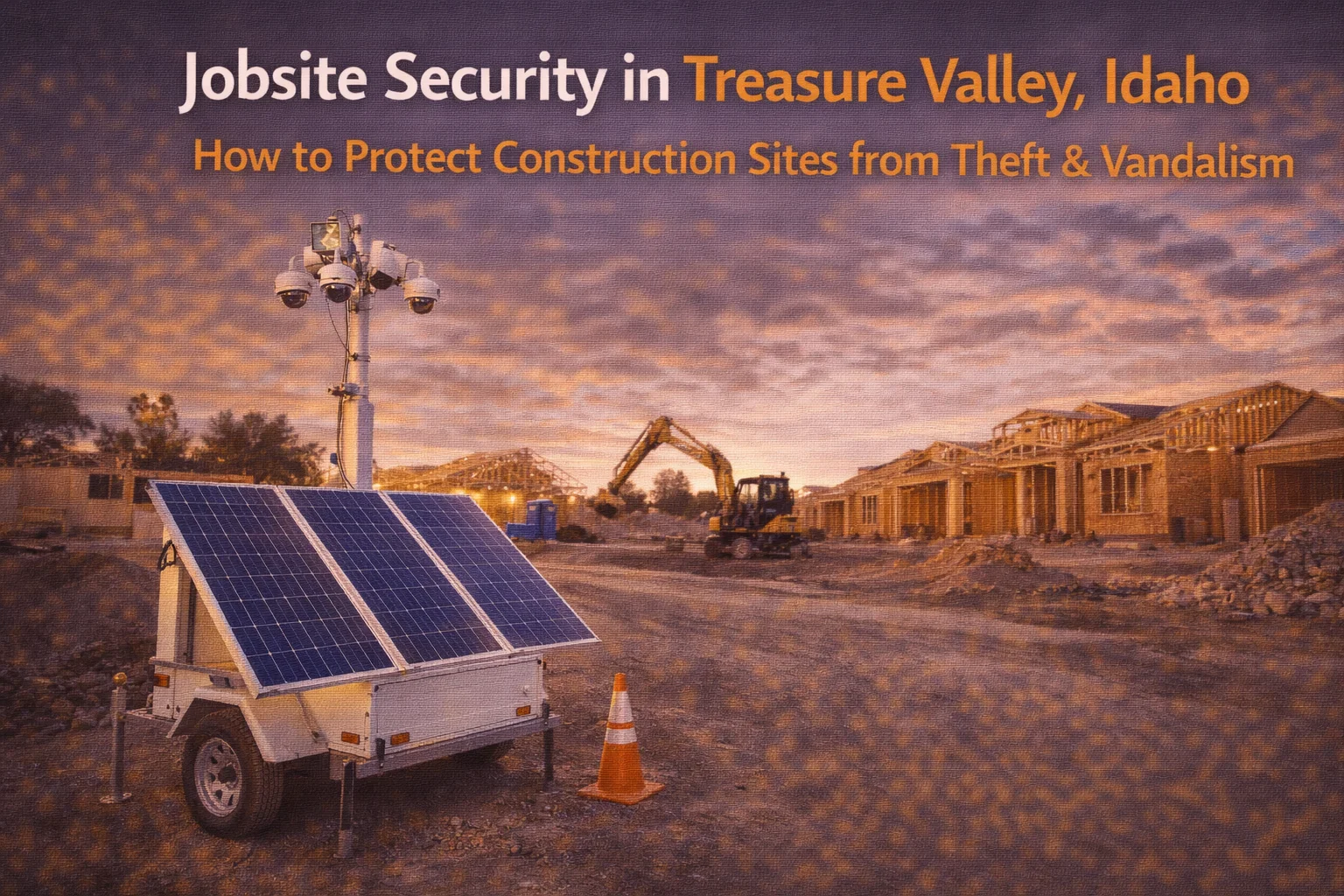
Construction sites are prime targets for theft and vandalism. Learn how modern jobsite security systems help Treasure Valley builders protect materials, equipment, and timelines with confidence.
Construction sites are dynamic, fast-moving environments—and that makes them vulnerable. Materials arrive before buildings are enclosed. Tools are left overnight. Multiple trades come and go. Schedules shift. Access changes daily.
Across the Treasure Valley in Idaho, builders and contractors face a growing challenge: protecting jobsites from theft, vandalism, and unauthorized access without slowing projects down.
Modern jobsite security isn’t about reacting after something goes missing. It’s about visibility, deterrence, and accountability—using systems designed specifically for temporary, evolving construction environments.
This guide explains why jobsites are at risk, how modern jobsite security works, and what builders should consider when protecting active construction projects.
Why Construction Sites Are High-Risk Targets
Unlike finished homes or occupied buildings, construction sites are predictable in all the wrong ways.
They often include:
High-value materials delivered early
Expensive tools and equipment left overnight
Temporary fencing or limited access control
No permanent occupants
Changing site layouts
For theft and vandalism, this combination creates opportunity. Losses don’t just affect materials—they cause schedule delays, insurance claims, reorders, and crew downtime.
In many cases, a single theft event costs far more than proactive security would have.
How Jobsite Security Has Changed
Traditional jobsite security relied on:
Locks and fences
Signage
Occasional drive-by checks
Today’s jobsites require more flexibility.
Modern jobsite security systems provide:
Real-time visibility into site activity
Recorded footage for documentation
Alerts when movement occurs after hours
Clear deterrence through visible monitoring
Rather than depending on chance or periodic checks, builders gain consistent awareness of what’s happening on-site—day and night.
Many contractors begin exploring these options while researching broader technology solutions available through
👉 https://treasurevalleysolutions.com/services/
Jobsite Cameras vs Full Jobsite Security Systems
Security cameras are often the first step builders consider—and for good reason. Cameras provide visual monitoring and evidence when incidents occur.
However, cameras alone don’t always tell the full story.
Full jobsite security systems may include:
Cameras for visibility
Motion detection
Alerts and notifications
Lighting integration
Remote access and reporting
The difference is awareness versus response. Cameras show what happened. Security systems notify teams when something is happening—allowing faster action and better documentation.
The right approach depends on site size, value, location, and duration.
Deterrence Matters More Than Recovery
One of the most important aspects of jobsite security is deterrence.
Visible security cameras, lighting, and signage dramatically reduce opportunistic theft. Most jobsite theft isn’t sophisticated—it’s about convenience. When a site looks monitored, well-lit, and documented, it becomes a less attractive target.
The goal isn’t just to record incidents. It’s to prevent them from happening at all.
Temporary Security for Temporary Environments
Construction sites change constantly. Security systems must adapt just as quickly.
Modern jobsite security solutions are designed to be:
Temporary but reliable
Portable or semi-fixed
Scalable as projects evolve
Independent of permanent infrastructure
This flexibility allows builders to protect sites from early groundwork through final walkthroughs—without overbuilding or underprotecting at any stage.
Power, Connectivity, and Reliability on Jobsites
Unlike finished buildings, jobsites often lack permanent power or internet access. Effective jobsite security accounts for this reality.
Depending on the site, systems may use:
Temporary power connections
Solar-assisted solutions
Cellular connectivity
Hybrid configurations
Reliability is critical. A system that frequently goes offline provides false confidence and little real protection. Professional planning ensures systems stay operational in real-world jobsite conditions.
Why Professional Planning Matters for Builders
Jobsite security isn’t plug-and-play.
Professional design ensures:
Cameras cover meaningful areas
Equipment is protected from damage
Access points are prioritized
Systems can move or scale as the site changes
Poorly planned setups often miss critical zones, generate unusable footage, or become ignored altogether.
Builders who plan security intentionally treat it as part of the jobsite—not an afterthought.
Many incorporate jobsite security into broader project planning strategies similar to those outlined within
👉 https://treasurevalleysolutions.com/solutions/homeowner-solutions/
(adapted here for professional environments).
Frequently Asked Questions About Jobsite Security
Do jobsites really need security cameras?
Yes. Jobsites are frequent targets due to materials, equipment, and lack of occupancy.
Are jobsite cameras only useful after theft?
No. Their primary value is deterrence and real-time awareness.
Can jobsite security be temporary?
Yes. Many systems are designed specifically for temporary construction use.
Is jobsite security expensive?
Costs vary, but losses from a single incident often exceed the cost of proactive protection.
Does professional installation matter?
Absolutely. Placement, reliability, and adaptability are critical on construction sites.
Protecting Jobsites Without Slowing Projects
Effective jobsite security doesn’t interfere with construction—it supports it.
By providing visibility, deterring theft, and documenting activity, modern jobsite security systems help builders:
Reduce losses
Protect timelines
Improve accountability
Maintain peace of mind
For Treasure Valley builders and contractors, proactive jobsite security is no longer optional. It’s a practical tool that protects both projects and profitability.
When security is designed to fit the realities of construction, it becomes another system that quietly does its job—so crews can focus on doing theirs.