 (208) 991-3502
 Meridian, ID






 January 3, 2026
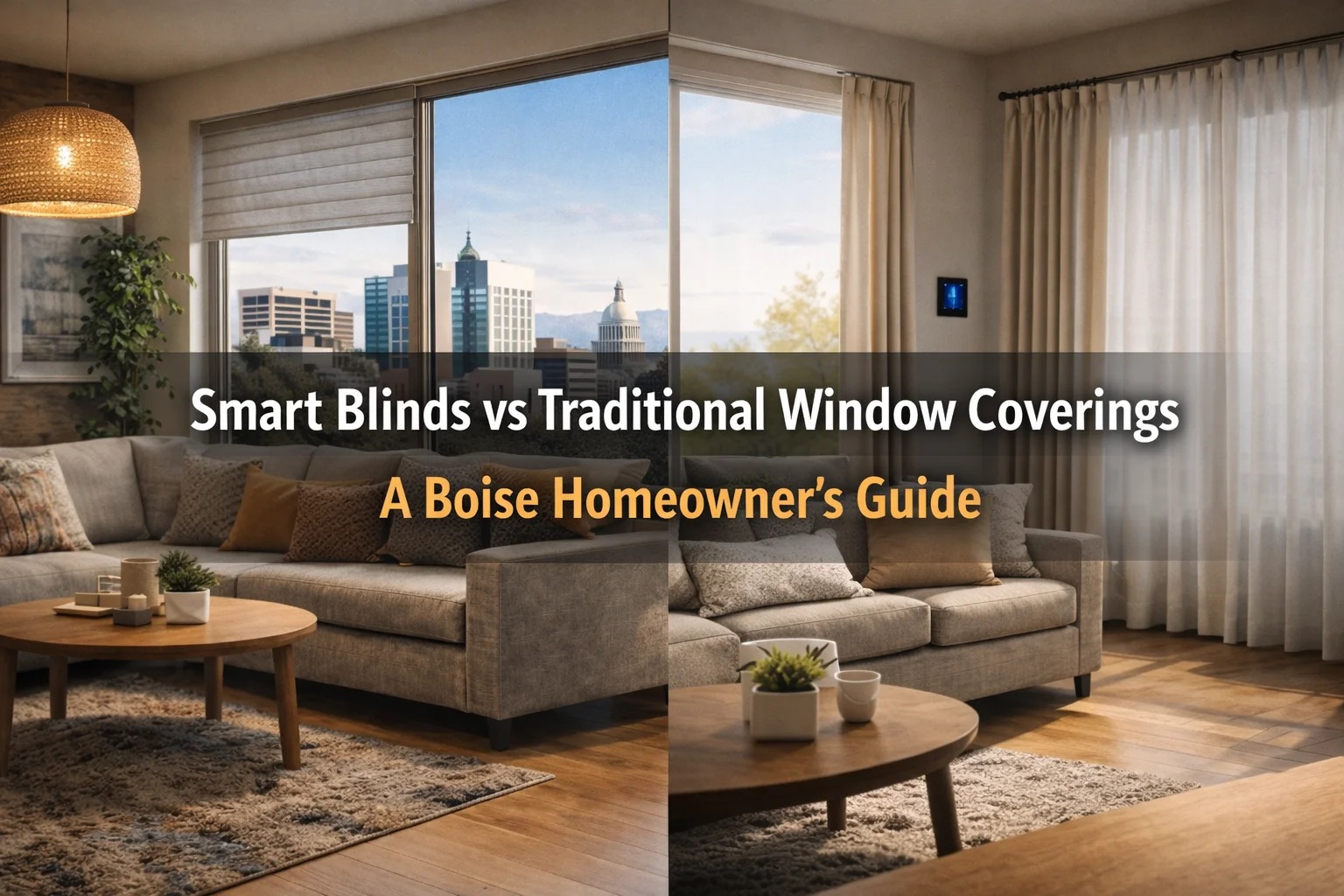
Smart blinds and traditional window coverings both control light and privacy, but the differences go far beyond appearance. This guide helps Boise homeowners understand how smart blinds compare to manual options when it comes to comfort, energy efficiency, convenience, and long-term value.
Choosing window coverings might seem like a simple design decision, but for Boise homeowners, it has a real impact on comfort, energy efficiency, and daily convenience. With the rise of smart home technology, many homeowners are now weighing smart blinds against traditional manual window coverings.
While both options serve the same basic purpose, they perform very differently—especially in Idaho’s climate. Understanding those differences helps homeowners make informed decisions that fit both lifestyle and long-term goals.
What Are Traditional Window Coverings?
Traditional window coverings include manual blinds, curtains, and shades operated by cords, rods, or hand adjustment. They’re familiar, affordable upfront, and widely available in countless styles.
However, traditional coverings rely entirely on manual use. If blinds aren’t adjusted consistently throughout the day, they provide limited protection against heat, glare, or nighttime heat loss. In busy households, they’re often left open or closed out of convenience rather than efficiency.
What Are Smart Blinds?
Smart blinds—also called motorized or automated window coverings—use small motors to open and close automatically. They can be controlled by wall switches, remotes, mobile apps, schedules, or voice commands when integrated into a smart home system.
Instead of reacting after a room becomes too hot or too bright, smart blinds adjust proactively throughout the day. This difference alone changes how a home feels and performs.
Many Boise homeowners explore smart blinds as part of broader home technology upgrades found within modern
👉 https://treasurevalleysolutions.com/services/
Energy Efficiency: A Key Difference in Boise’s Climate
Boise’s sunny summers and cold winters make window performance especially important.
Traditional blinds only work when someone remembers to adjust them. Smart blinds, on the other hand, respond automatically to time of day, sunlight, or temperature. During summer afternoons, they reduce solar heat gain before indoor temperatures spike. In winter, they help retain heat overnight by adding insulation at the window.
Over time, this consistency can noticeably reduce heating and cooling demand—something manual blinds simply can’t replicate.
Daily Convenience and Comfort
Convenience is where smart blinds clearly stand apart.
Instead of walking room to room adjusting blinds as the sun moves, smart blinds handle it automatically. They can open gradually in the morning, lower for privacy in the evening, or respond instantly with a single command.
This hands-free control becomes especially valuable in homes with:
Large windows
Vaulted ceilings
Open floor plans
Hard-to-reach windows
For many homeowners, once automation is in place, going back to manual blinds feels like a step backward.
Safety, Privacy, and Modern Living
Traditional blinds often rely on cords, which can pose safety concerns for children and pets. Smart blinds are cordless by design, offering a cleaner look and safer operation.
Privacy is also easier to manage. Automated schedules ensure blinds close at dusk without requiring reminders, maintaining privacy without sacrificing daylight during earlier hours.
Upfront Cost vs Long-Term Value
Traditional window coverings typically cost less initially. Smart blinds require a higher upfront investment, especially when professionally installed.
However, many Boise homeowners view smart blinds as a long-term upgrade, not a quick purchase. Reduced energy usage, improved comfort, increased home value, and integration with other smart systems all contribute to their overall return.
When paired with other upgrades outlined in
👉 https://treasurevalleysolutions.com/solutions/homeowner-solutions/
smart blinds become part of a future-ready home strategy rather than a standalone feature.
Why Professional Installation Matters
Both smart and traditional window coverings benefit from proper installation, but automation adds complexity.
Professional installation ensures:
Accurate window measurements
Quiet, reliable motor operation
Clean power solutions
Correct automation programming
Long-term system reliability
For smart blinds, this step makes the difference between a system that enhances daily life and one that causes frustration.
Frequently Asked Questions
Are smart blinds worth it compared to traditional blinds?
For homeowners focused on comfort, energy efficiency, and convenience, yes. Smart blinds provide consistent performance that manual blinds can’t match.
Do smart blinds still work if the internet goes out?
Yes. Most systems continue to operate locally and retain schedules even during connectivity interruptions.
Can smart blinds be installed in existing homes?
Absolutely. Many Boise homes retrofit smart blinds without major construction.
Are traditional blinds still a good option?
They can be, especially for decorative or low-use spaces. However, they offer limited efficiency compared to automated options.
Do smart blinds increase home value?
Smart window coverings are increasingly seen as premium features and often complement other smart home upgrades.
Making the Right Choice for Your Boise Home
Smart blinds and traditional window coverings both have a place, but they serve different lifestyles. For Boise homeowners looking to reduce energy use, improve comfort, and simplify daily routines, smart blinds offer clear advantages.
When thoughtfully designed and professionally installed, automated window coverings become an invisible upgrade—quietly working in the background to make your home more comfortable year-round.